
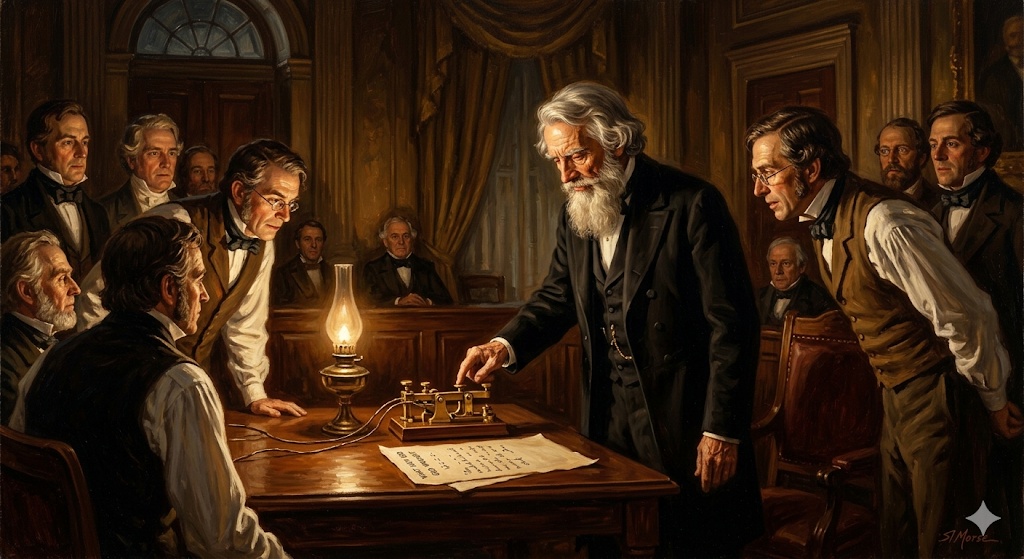
[A dramatic, atmospheric oil painting capturing the historic moment Samuel Morse sends the world’s first commercial telegraph message on May 24, 1844. In a dimly lit, classic 19th-century committee room inside the U.S. Capitol, the central focus is an intricate, polished brass telegraph key resting on a dark mahogany table. Morse, an intense elder inventor with flowing silver hair and a long beard, dressed in a formal black Victorian frock coat, focuses deeply as his finger presses down on the lever. A soft, warm light from an unseen oil lamp illuminates his face and the parchment paper nearby. Intrigued congressmen and observers in period attire look on from the shadows with expressions of awe and curiosity. The style uses rich, textured impasto oil brushstrokes and a high-contrast chiaroscuro palette of deep amber and shadow tones, conveying the raw excitement of a monumental technological breakthrough.]
On May 24, 1844, inventor Samuel Morse fundamentally changed the course of human communication by transmitting the first official message over a commercial telegraph line. Sitting in a committee room at the United States Capitol in Washington, D.C., Morse tapped out a series of electronic pulses that traveled along overhead wires to his assistant, Alfred Vail, at a railroad station in Baltimore, Maryland. The transmitted message was a biblical quotation from the Book of Numbers: “What hath God wrought.”
The Historical Impact
The inauguration of this commercial telegraph line marked the dawn of the telecommunications age. Prior to this moment, the speed of information was strictly limited by the physical speed of transportation—reliant on horses, trains, or steamships. Morse’s system allowed information to travel near the speed of light, entirely detaching communication from physical transit.
-
Global Connectivity: Within just a few decades, telegraph lines gridlocked continents and crossed oceans via transatlantic cables, laying the infrastructural and conceptual foundation for the modern internet.
-
The Transformation of Society: The ability to transmit data instantaneously completely revolutionized global journalism, transformed military strategy, and modernized corporate commerce by allowing real-time tracking of markets and shipping.