The Event:
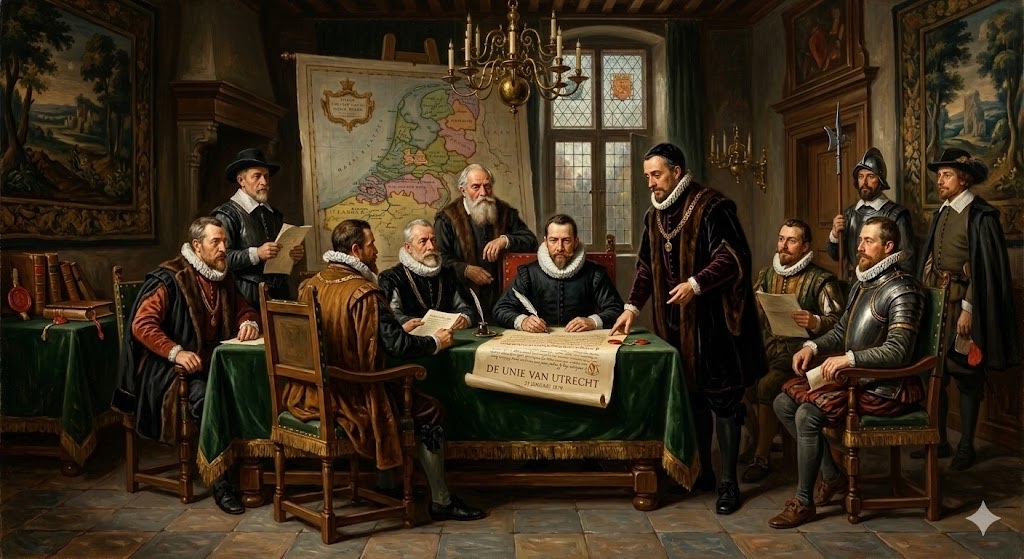
The Union of Utrecht was a monumental political pact concluded by the northern provinces of the Netherlands. Signed in response to the Catholic southern provinces unifying under Spanish allegiance (the Union of Arras), this treaty brought together the northern Protestant provinces into a joint defensive military alliance against the rule of King Philip II of Spain during the Eighty Years’ War. It served as the de facto constitution and political backbone for what would shortly become the independent Republic of the Seven United Netherlands. Crucially, Article 13 of the treaty established that every individual would remain free in their choice of religion, and no one could be persecuted or investigated because of their faith.
The Impact:
The signing of the Union of Utrecht was a foundational milestone in European history, fundamentally altering the geopolitical landscape of the region. It laid an early, pioneering cornerstone for religious tolerance in Europe through Article 13’s guarantee of religious freedom. By creating a unified political and economic framework, the Union provided the stability necessary to launch the Dutch Golden Age, enabling the tiny nation to rapidly evolve into a global maritime, commercial, and financial superpower throughout the 17th century.