Historical Overview
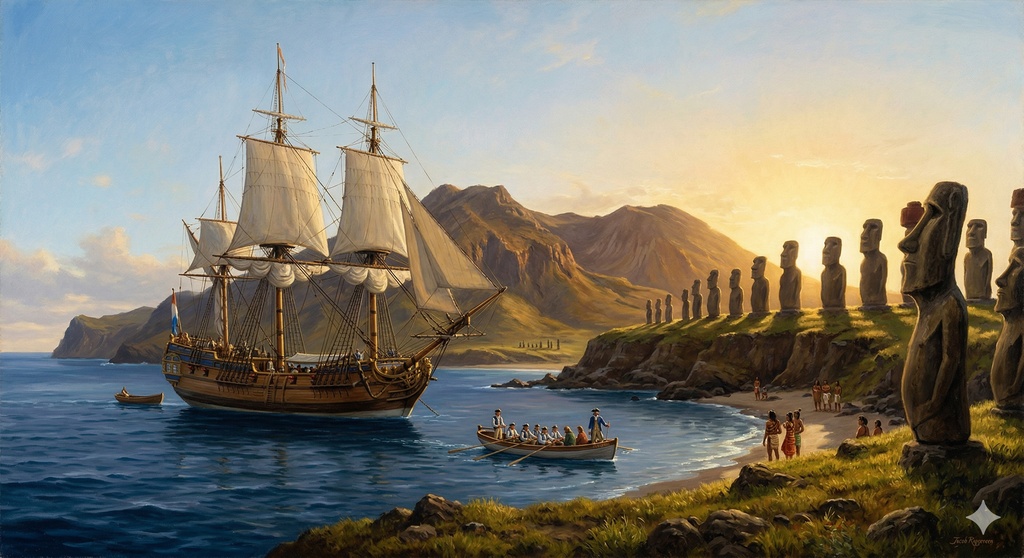
The Event: On April 5, 1722—Easter Sunday—Dutch explorer Jacob Roggeveen became the first European to set eyes on the isolated island of Rapa Nui. His fleet of three ships anchored off the volcanic coast, where the crew was astonished to find hundreds of colossal stone statues, known as Moai, standing along the shore. The encounter was a moment of profound cultural collision between a seafaring European empire and a civilization that had thrived in total isolation for centuries.
The Impact: The discovery of Easter Island introduced a monumental mystery to the world’s consciousness. The Moai statues represent the ingenuity and spiritual devotion of the Rapa Nui people, but the island’s history also serves as a significant case study in environmental resource management. This first contact ended the island’s isolation, leading to a series of interactions that would eventually challenge European colonial perspectives and bring global attention to the fragile and remarkable heritage of Rapa Nui.