
Historical Artworks and Descriptions: April 4th (V2)
This document serves as a record of three impactful historical events that occurred on April 4th, as interpreted through the lens of realistic oil painting.
Note: The original paintings generated for this record are visible within the chat conversation history. Due to technical limitations, permanent links to these specific digital artworks cannot be provided in this external document.
1. The Assassination of Martin Luther King Jr. (April 4, 1968)
Historical Overview
The Event: This scene captures the catastrophic moment immediately following the assassination of Dr. Martin Luther King Jr. on the balcony of the Lorraine Motel in Memphis, Tennessee. Dr. King, a towering figure of the Civil Rights Movement, had been standing outside Room 306 when a single shot struck him. The artwork depicts the immediate aftermath: his aides and colleagues—including figures like Andrew Young and Ralph Abernathy—converging in shock, while pointing frantically toward the boarding house across the street where the shot originated.
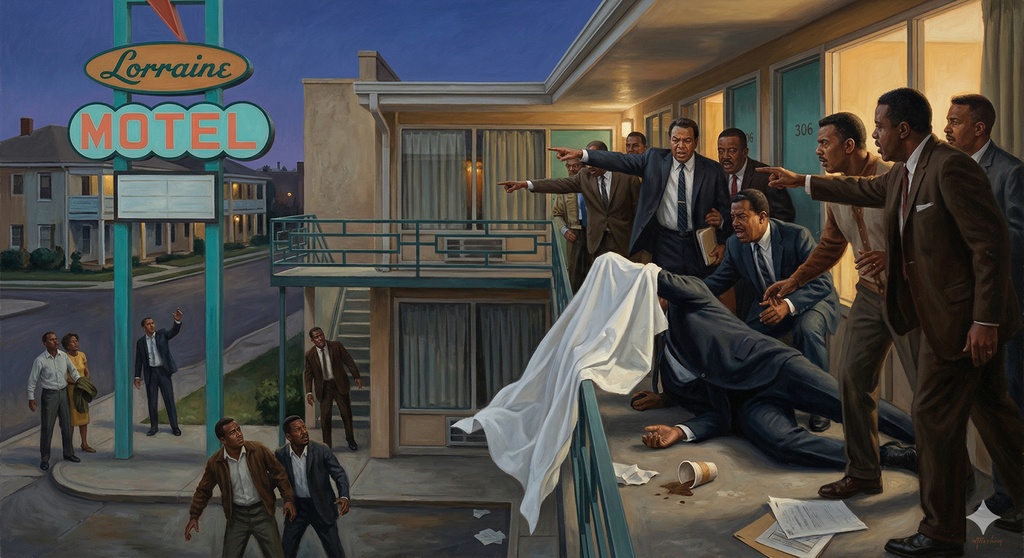
The Impact: The assassination was a defining and tragic turning point in American history. It triggered a wave of race riots in over 100 cities across the United States. Paradoxically, his death both fractured the nonviolent movement he championed and accelerated the passage of the landmark Civil Rights Act of 1968 (the Fair Housing Act) just days later. It cemented his legacy as a martyr for justice.
2. The Conversion of Constantine at the Battle of the Milvian Bridge (April 4, 312 AD – Trad.)
Historical Overview
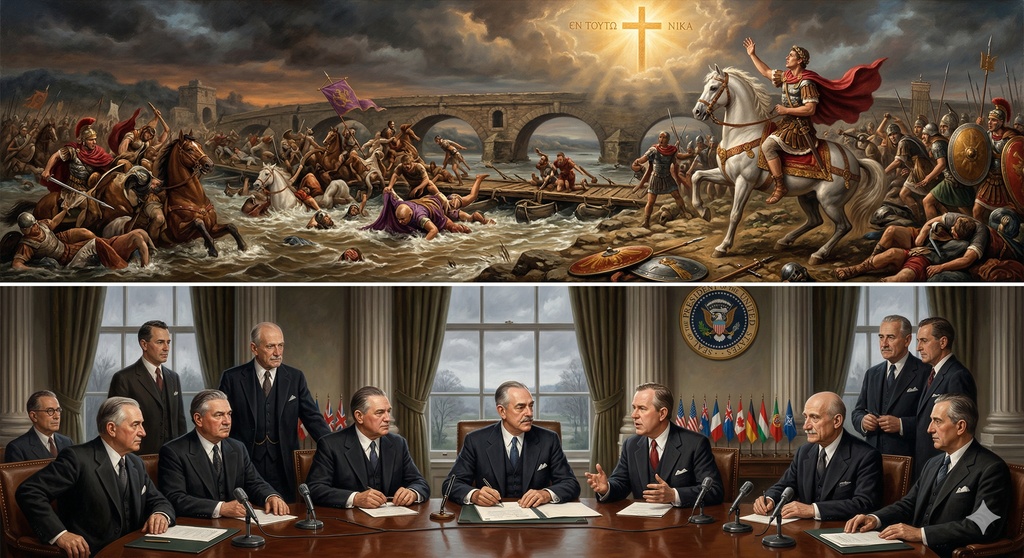
The Event: This dramatic interpretation focuses on the pivotal Battle of the Milvian Bridge. The artwork centers on Emperor Constantine I during the heat of battle against his rival Maxentius. Constantine is shown looking skyward toward a miraculous vision—a radiant cross of light in the heavens, accompanied by the command ‘ΕΝ ΤΟΥΤΩ ΝΙΚΑ’ (Greek for ‘In This, Conquer’). Below, Maxentius’s forces collapse as their retreat across the Tiber River fails.
The Impact: By defeating Maxentius, Constantine became the sole ruler of the Western Roman Empire. His conversion led directly to the Edict of Milan (313 AD), which legalized Christianity and paved the way for it to become the dominant religion of the Empire. This event fundamentally altered the religious and cultural trajectory of Europe and the Mediterranean world.
3. The Founding of NATO: The Signing of the North Atlantic Treaty (April 4, 1949)
Historical Overview
The Event: This painting depicts the formal signing of the North Atlantic Treaty in Washington, D.C. Twelve foreign ministers and representatives from the founding nations are gathered around a massive table. U.S. Secretary of State Dean Acheson is centrally seated, focused on signing the document, surrounded by figures like Britain’s Ernest Bevin and France’s Robert Schuman.
The Impact: The signing created NATO (the North Atlantic Treaty Organization), a landmark defensive alliance. It marked a dramatic shift in American foreign policy from isolationism to permanent peacetime involvement in European security. The treaty established that an armed attack against one member would be considered an attack against all, solidifying the geopolitical division of the Cold War.