
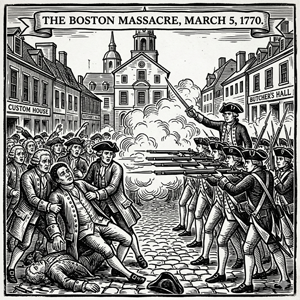
The tension leading up to the Boston Massacre on March 5, 1770, was deeply rooted in the heavy military presence and oppressive taxation imposed by the British Crown. Following the Townshend Acts, which levied taxes on everyday imported goods, the British government dispatched troops to Boston to enforce compliance and quell growing colonial unrest. This occupation was intensely resented by the locals, who viewed the standing army as a direct threat to their liberty and economic livelihoods. The atmosphere in the city grew increasingly volatile as off-duty soldiers competed with residents for jobs, making daily skirmishes commonplace. This simmering animosity finally boiled over when a mob of angry Bostonians confronted a small guard of British soldiers outside the Custom House, hurling insults, snowballs, and debris until the panicked troops fired into the crowd, killing five men.
The fallout from this deadly encounter played a pivotal role in galvanizing public support for the American Revolution. Through the strategic dissemination of propaganda, such as Paul Revere’s highly sensationalized engraving of the event, colonial leaders like Samuel Adams framed the incident as a cold-blooded slaughter of innocent civilians by a tyrannical government. This compelling narrative spread rapidly across the Thirteen Colonies, helping to unite disparate factions and deepening a collective sense of grievance against British rule. The Boston Massacre became an enduring rallying cry that severely eroded remaining loyalties to the Crown, serving as a crucial psychological turning point that laid the ideological groundwork for the Revolutionary War.