
The Event:
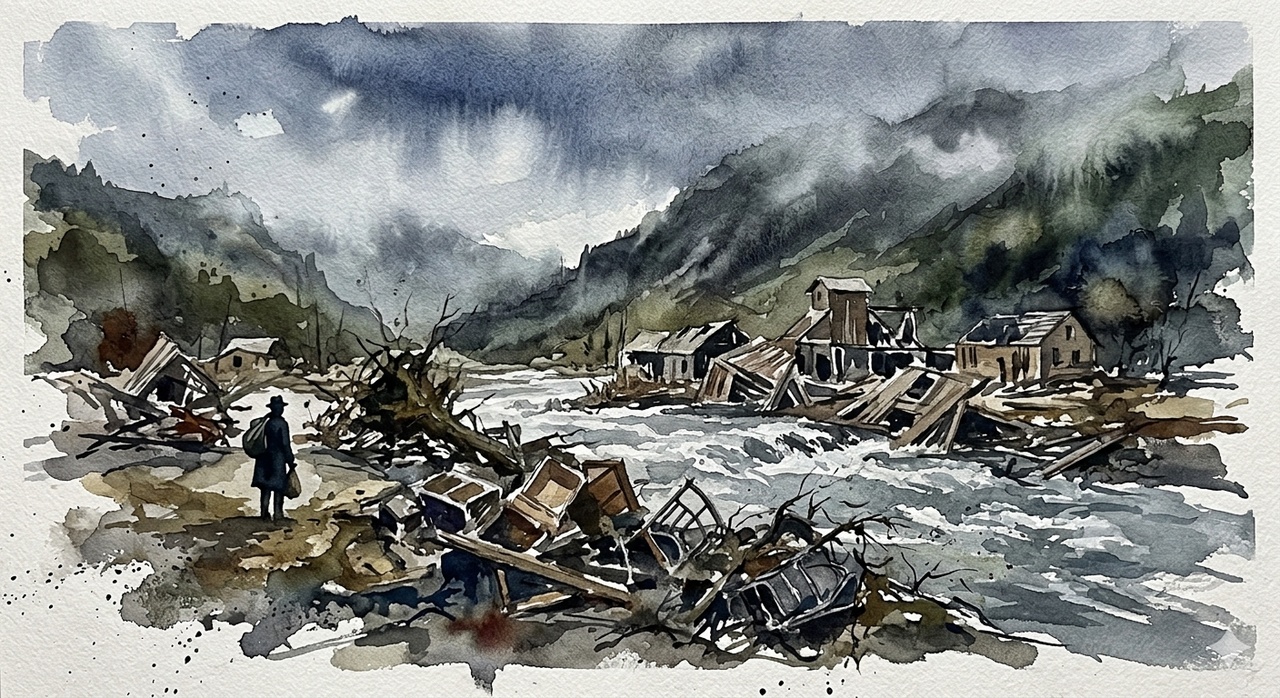
On May 31, 1889, the United States suffered one of the deadliest and most devastating civil catastrophes in its history: the Johnstown Flood. Following days of unprecedented, torrential rainfall across western Pennsylvania, the South Fork Dam—a poorly maintained earthen dam located 14 miles upstream on the Little Conemaugh River—catastrophically failed. The collapse unleashed a colossal wall of 20 million tons of water that roared down the narrow mountain valley at speeds approaching 40 miles per hour. By the time the torrent struck the industrial city of Johnstown, it had transformed into a crushing wave of water, uprooted trees, houses, locomotives, and barbed wire, instantly obliterating the town and claiming the lives of more than 2,200 people.
The Impact:
The tragedy left a profound imprint on American society, legal history, and emergency response infrastructure. The disaster prompted a massive, unprecedented relief effort from across the nation and 18 foreign countries. It marked the first major peacetime disaster relief campaign for the newly formed American Red Cross, led personally by Clara Barton, solidifying the organization’s role as the premier domestic disaster response agency. Despite widespread public outrage over the South Fork Fishing and Hunting Club’s negligent maintenance of the dam—whose members included wealthy industrial tycoons like Andrew Carnegie and Henry Clay Frick—survivors suffered total legal defeat in court, as the courts ruled the disaster an “Act of God.” The immense public anger and perceived injustice became a major catalyst for a significant shift in American jurisprudence, as courts moved away from restrictive traditional negligence standards toward adopting principles of strict liability for ultra-hazardous activities or poorly maintained structures, ensuring owners could be held accountable for high-risk ventures regardless of intent.