
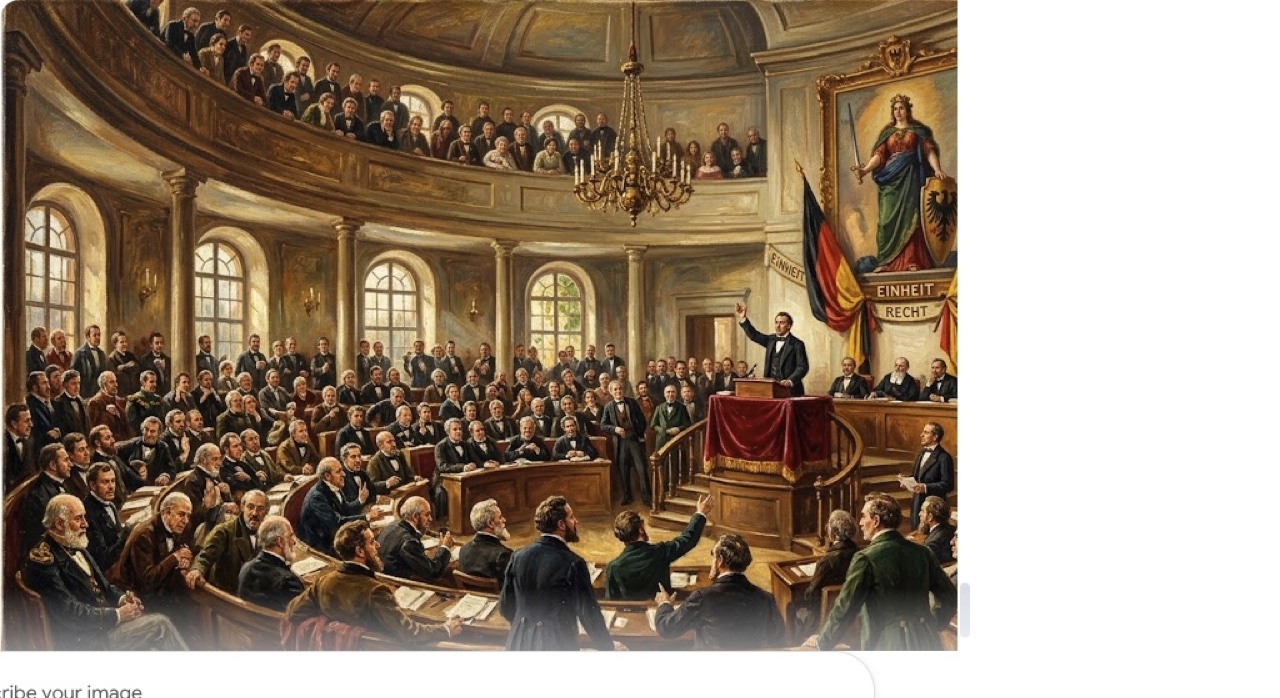
One impactful historical event that occurred on May 18 is the first German National Assembly in 1848. Also known as the Frankfurt Parliament or Assembly of St. Paul’s Church, this gathering took place in Frankfurt am Main and constituted the first freely elected parliament for all of Germany. The assembly was a product of the German revolutions of 1848–1849 and was tasked with the dual, monumental goal of creating a unified German nation and a liberal, democratic constitution. Though its long-term goals were eventually crushed by the restoration of authoritarian power, the act itself was revolutionary, a symbolic victory for the ideals of popular sovereignty, liberty, and national self-determination.
The impact of the first German National Assembly was complex and long-lasting. While the parliament failed to achieve German unification through democratic means—with its final, hard-won constitution being rejected by the major German princes, and the assembly itself dissolving in 1849—its influence on German and European history was profound. The constitution it produced, the Frankfurt Constitution, provided a model and a benchmark for later German democracies, including the Weimar Republic and the modern Federal Republic of Germany’s basic law. It popularized the idea of a centralized, constitutional German nation, a goal that would eventually be achieved, albeit through different means, by Otto von Bismarck. Today, the Assembly of St. Paul’s Church is considered a key milestone in the long and often turbulent struggle for a democratic Germany.