
The Event:
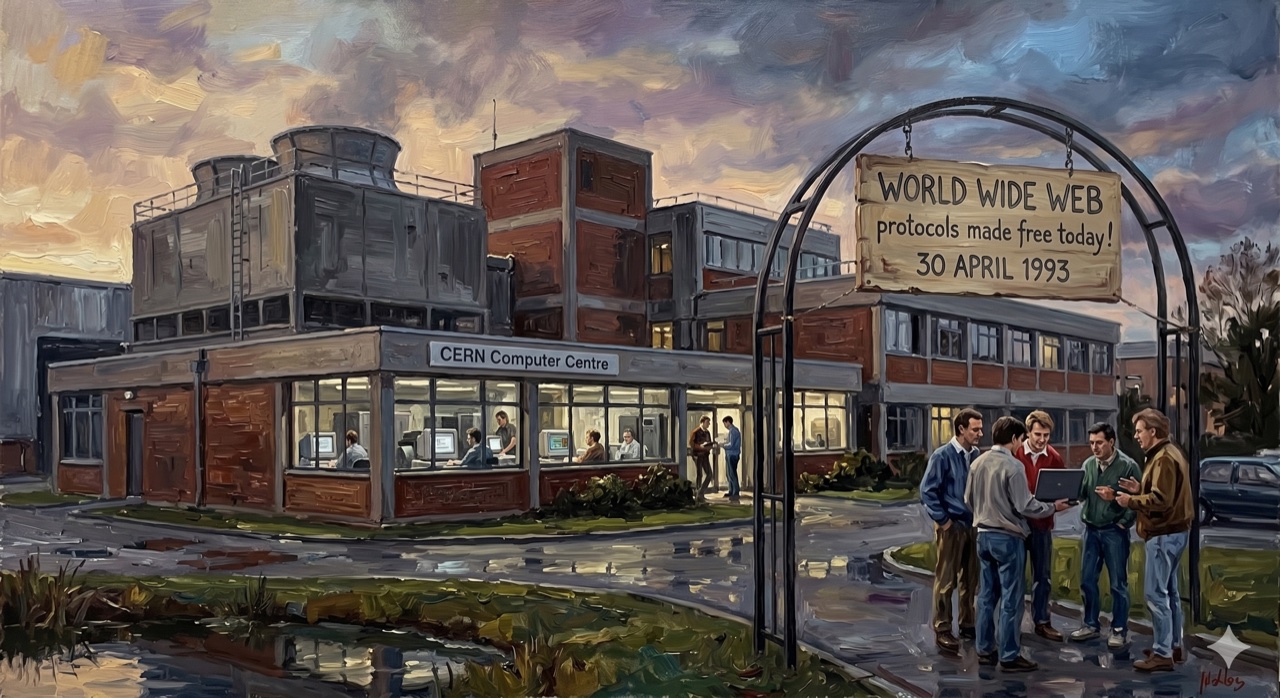
On April 30, 1993, the European Organization for Nuclear Research (CERN) took a monumental step in the history of communication by declaring that the basic technology of the World Wide Web would be placed in the public domain, making it free for anyone to use and develop without any royalities or intellectual property constraints. This critical decision was driven by the Web’s inventor, Tim Berners-Lee, who argued that an open and free web was essential to its growth and potential to connect humanity. The visualization captures the quiet but profound moment at the CERN laboratory: specialized scientists and engineers are seen gathered near early, monochrome computer terminals, which are glowing with the very first text-based web pages. The brushwork emphasizes the intellectual focus and understated scientific environment, contrasting the momentous future implications of the code they are interacting with.
The Impact:
The decision to make the Web protocols free was the single most important factor in its explosive global adoption. By ensuring the technology remained open and accessible, CERN prevented the fragmentation of the digital world into closed, proprietary networks. It unlocked a wave of innovation, allowing developers worldwide to build browsers, servers, and applications that soon became the cornerstone of modern life, commerce, and education. If the Web had been monetized or restricted, it likely would have grown significantly slower or remained a niche tool. Today’s hyper-connected, digital civilization traces its lineage directly back to this selfless act of openness in 1993, which truly created the “World Wide” Web.