The Event:
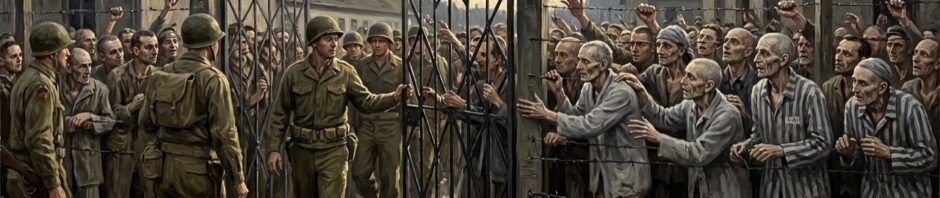
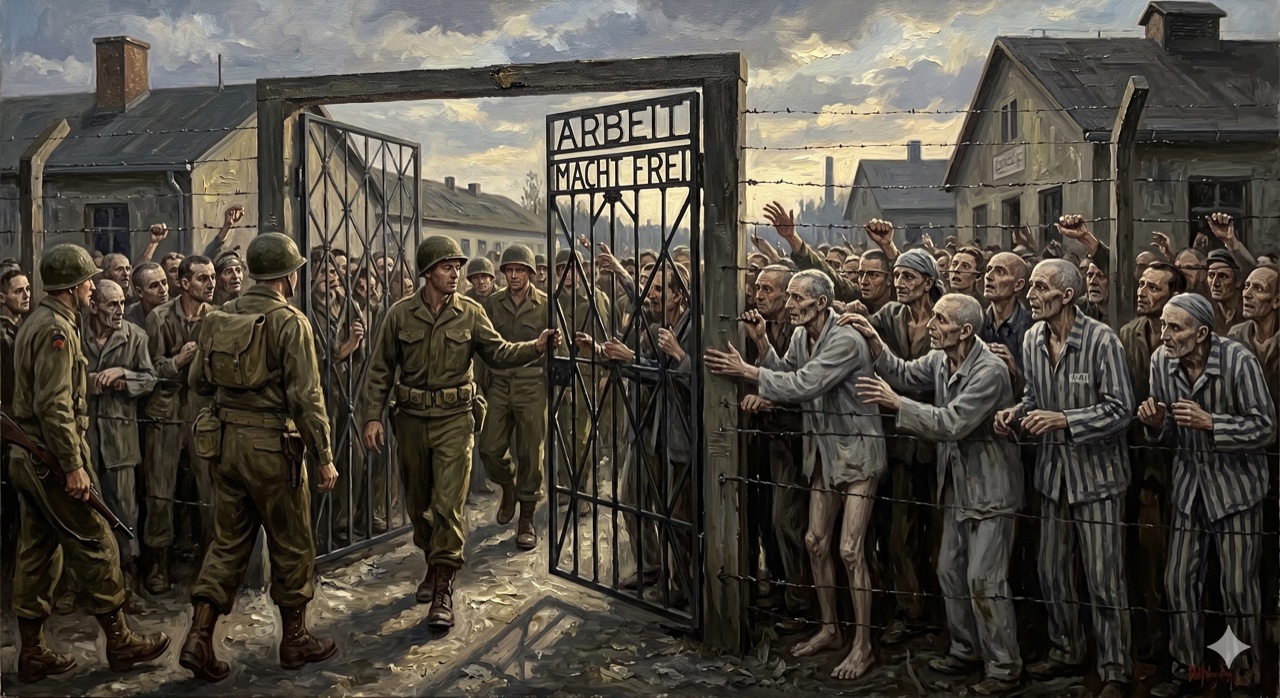
On April 29, 1945, units of the U.S. Seventh Army, specifically the 42nd Rainbow Division and the 45th Infantry Division, liberated the Dachau Concentration Camp near Munich, Germany. Dachau was the first regular concentration camp established by the Nazi government and had been in operation for over 12 years. The liberation was a chaotic, horrific, and profoundly emotional event.
The Impact:
The liberation of Dachau was a watershed moment in documenting the horrors of the Holocaust and became a definitive symbol of Allied victory over Nazi tyranny. The sheer scale of the atrocity witnessed by the liberating soldiers—thousands of dead bodies in railcars and warehouses, alongside the walking skeletons of the survivors—shattered any remaining skepticism about the nature of the Nazi regime. Images and film of Dachau, disseminated globally, forced the world to confront the full reality of the ‘Final Solution.’ Historically, it solidified international resolve during the subsequent Nuremberg Trials, catalyzed the movement for a Jewish homeland, and became a cornerstone for the establishment of international human rights law, ensuring that ‘Never Again’ became a defining global imperative.