
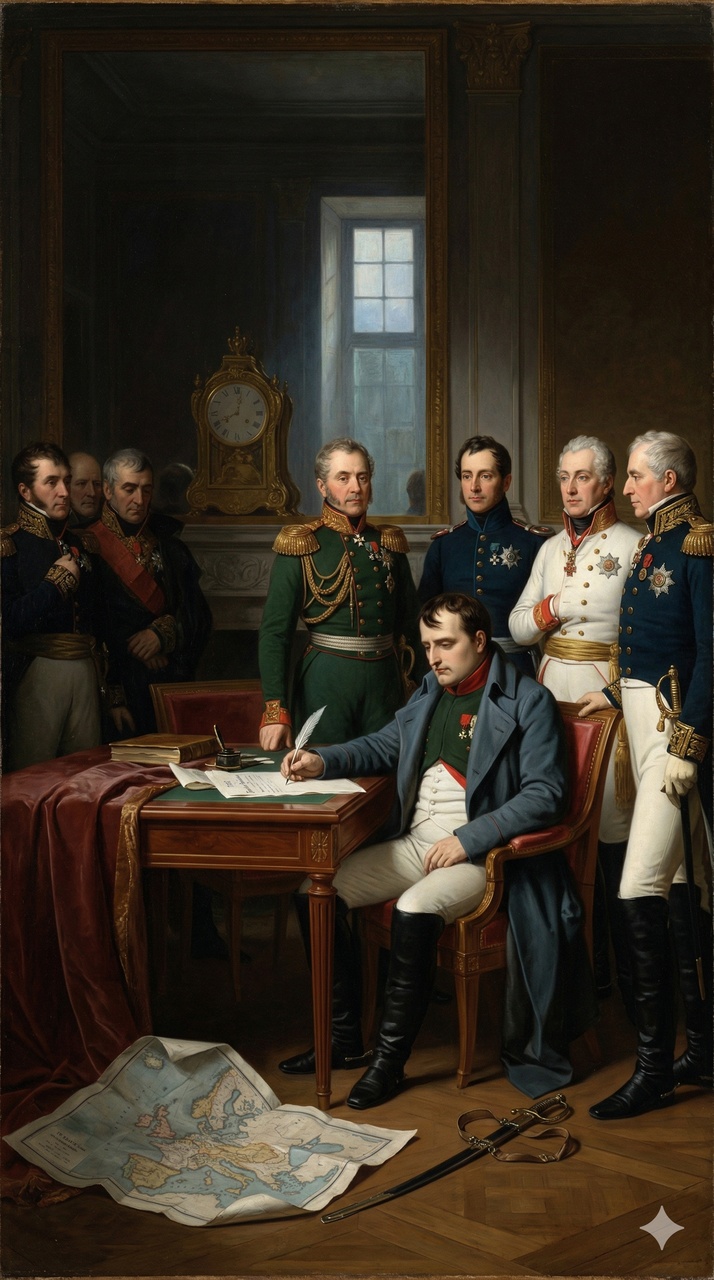
The Event: On April 11, 1814, the once-invincible Napoleon Bonaparte signed the Treaty of Fontainebleau, effectively ending his reign as Emperor of the French. Following the capture of Paris by the Sixth Coalition, Napoleon was forced into unconditional abdication at the Palace of Fontainebleau. This painting captures the somber, heavy atmosphere of the study; the man who had redrawn the maps of Europe is shown in a rare moment of stillness, slumped in thought before the document that would exile him to the Mediterranean island of Elba. Surrounded by the opulence of an empire that was slipping through his fingers, he is stripped of his continental power, marking the collapse of the First French Empire.
The Impact: The abdication at Fontainebleau reshaped the destiny of Europe, leading directly to the restoration of the Bourbon monarchy and the pivotal Congress of Vienna. This gathering of world leaders aimed to establish a new balance of power, seeking to prevent any single nation from ever dominating the continent so completely again. While Napoleon’s story was not yet finished—his daring escape from Elba and the subsequent “Hundred Days” would soon follow—his fall in 1814 signaled the end of French hegemony. However, the legal and social reforms of the Napoleonic Code persisted, ensuring that his influence on modern governance, civil law, and the administration of the state would endure long after his final exile.