
The Event:
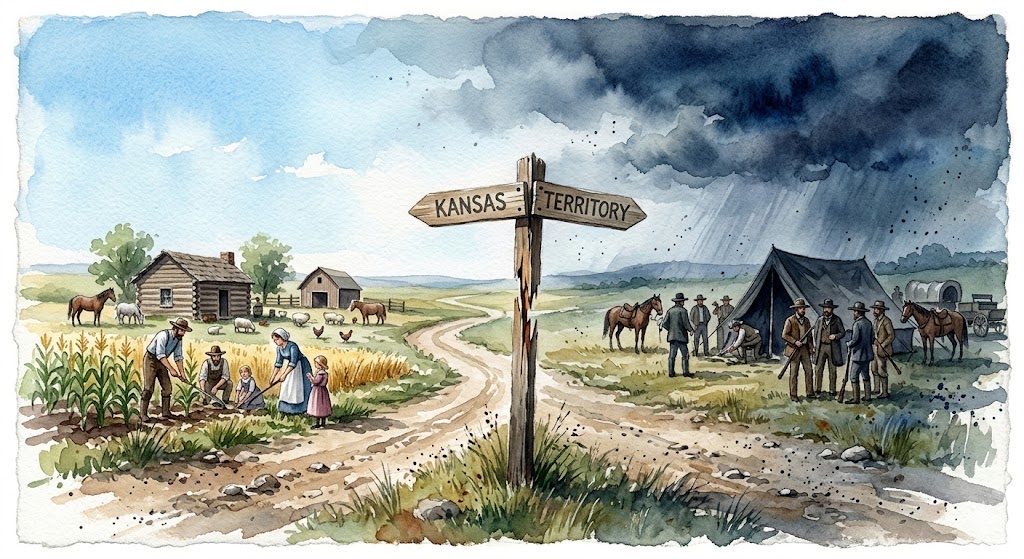
On May 30, 1854, President Franklin Pierce signed into law the Kansas–Nebraska Act, a critical piece of legislation that would set the United States on an irreversible path toward civil war. Drafted by Senator Stephen A. Douglas of Illinois, the act established the territories of Kansas and Nebraska. Its most volatile provision was the mandate of popular sovereignty, which allowed white settlers within those territories to vote on whether to permit slavery within their borders. In doing so, the act explicitly repealed the Missouri Compromise of 1820, which had legally prohibited slavery north of the 36°30′ parallel for over three decades.
The Impact:
The passage of the Kansas-Nebraska Act caused immediate political and social upheaval, fundamentally reshaping the American landscape. Rather than settling the slavery question peacefully, the act turned the Kansas territory into a violent testing ground. Pro-slavery and anti-slavery settlers flooded into the territory to influence the vote, leading to a brutal guerrilla war marked by electoral fraud, raids, and massacres — a period known as “Bleeding Kansas” that foreshadowed the national conflict to come. The political fallout shattered the existing party system: it fractured the Democratic Party along regional lines and destroyed the Whig Party completely, leading anti-slavery activists, former Whigs, and Free-Soilers to unite as the Republican Party. By tearing down long-standing legislative compromises on slavery, the act deepened regional polarization, directly paving the way for the election of Abraham Lincoln in 1860 and the outbreak of the American Civil War.