The Event:
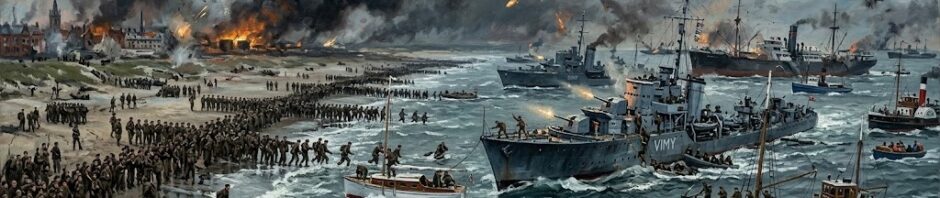
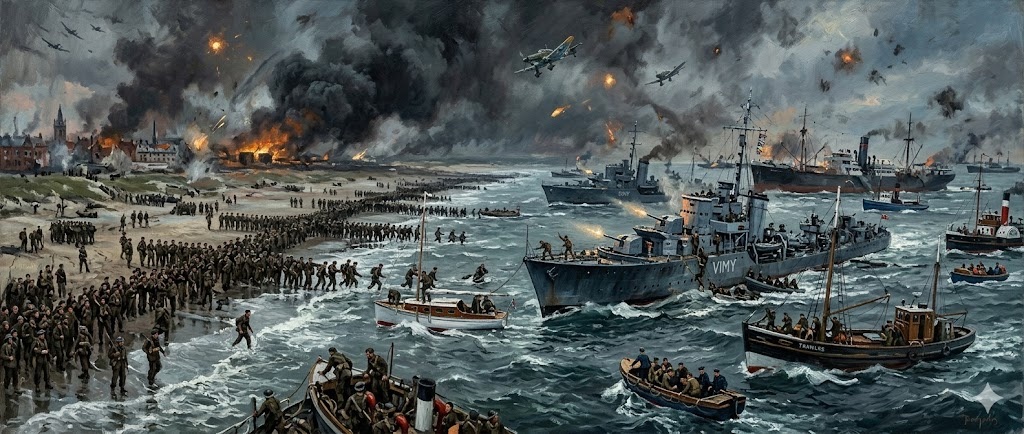
On May 26, 1940, one of the most remarkable and pivotal military operations of World War II began: Operation Dynamo, the mass evacuation of Allied soldiers from the beaches and harbor of Dunkirk, France. Following the blitzkrieg invasion of France and the Low Countries by Nazi Germany, the British Expeditionary Force (BEF) along with elements of the French and Belgian armies found themselves completely cut off, surrounded, and backed against the English Channel. With the German forces closing in, the situation appeared entirely hopeless, and the British government prepared for the imminent loss of their entire seasoned fighting force, an event that likely would have forced a British surrender.
The Impact:
The successful execution of Operation Dynamo over the subsequent nine days fundamentally altered the trajectory of World War II, turning what could have been a total catastrophe into a psychological triumph. Through a makeshift armada of Royal Navy destroyers, merchant vessels, and famously, hundreds of civilian “Little Ships”—including fishing boats, pleasure yachts, and lifeboats—a staggering 338,226 Allied soldiers were successfully rescued. Preserving this core army provided Great Britain with the vital manpower needed to defend the home front and eventually form the nucleus of the forces that would liberate Europe years later. While a massive military retreat, the miraculous rescue was masterfully framed by Prime Minister Winston Churchill as a moral victory, galvanizing British domestic resolve and birthing the cultural concept of the “Dunkirk Spirit”—defiant unity in the face of absolute adversity—which inspired Churchill’s legendary “We shall fight on the beaches” speech to Parliament on June 4. The evacuation was inadvertently aided by a crucial 48-hour “halt order” issued by the German High Command, a tactical pause that gave the Allies the razor-thin window needed to fortify the perimeter and organize the sealift—a decision widely regarded as one of Hitler’s first major strategic blunders of the war.