The Event:
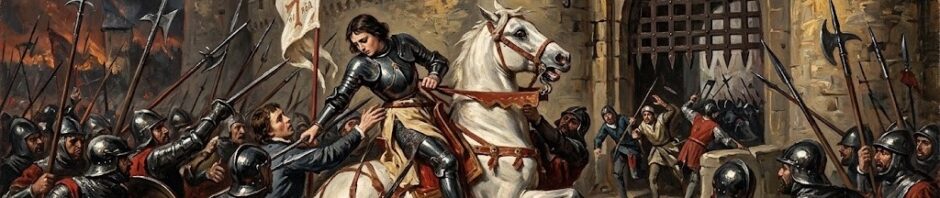
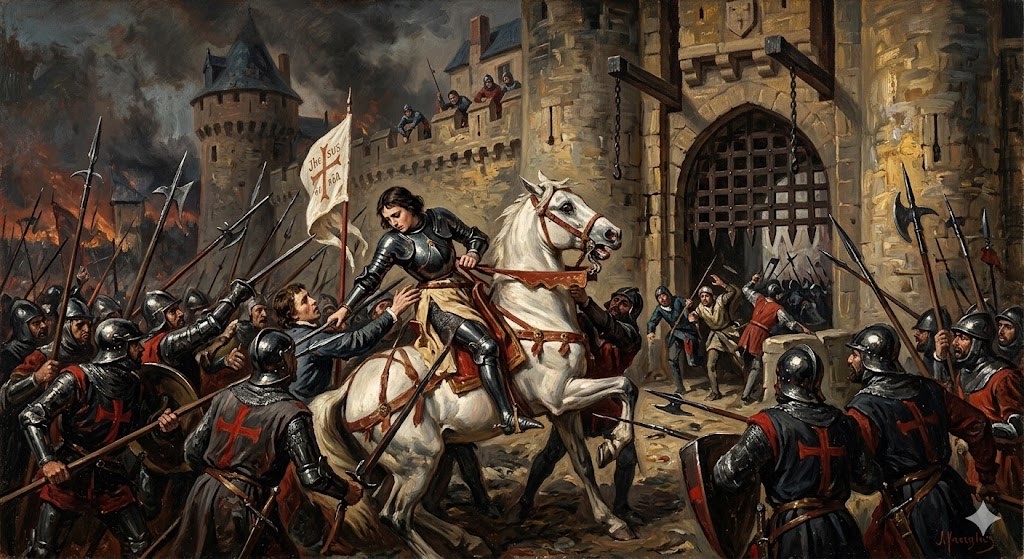
On May 23, 1430, a turning point in the Hundred Years’ War occurred: the capture of Joan of Arc. Following her spectacular success in relieving the Siege of Orléans, Joan was leading a small force to reinforce the besieged town of Compiègne against Burgundian troops allied with the English. During a skirmish outside the city walls, Joan bravely commanded the rearguard, allowing her soldiers to escape into the safety of the fortress. However, as she was entering the city gates, the Burgundian commander ordered them closed, leaving Joan trapped outside. She was pulled from her horse and taken prisoner, setting into motion the sequence of events that would lead to her legendary trial and execution.
The Impact:
The impact of Joan of Arc’s capture was seismic and complex, fundamentally altering the psychology of the war. For the French, losing their inspired and supposedly divinely guided leader was a devastating morale blow, stalling their momentum and sparking profound grief and internal political divisions. Conversely, the English and Burgundians celebrated her capture as a monumental victory, believing they had silenced the source of the recent French resurgence. However, Joan’s subsequent trial, conviction, and martyrdom ultimately backfired on her captors. Her dignified conduct under immense pressure, combined with her steadfast faith, transformed her into a powerful unifying symbol for the French cause. Her death catalyzed a fierce new resolve within the French army and nobility, leading to a decade of coordinated offensives that finally expelled the English from most of France, fulfilling the very mission Joan had initiated.