
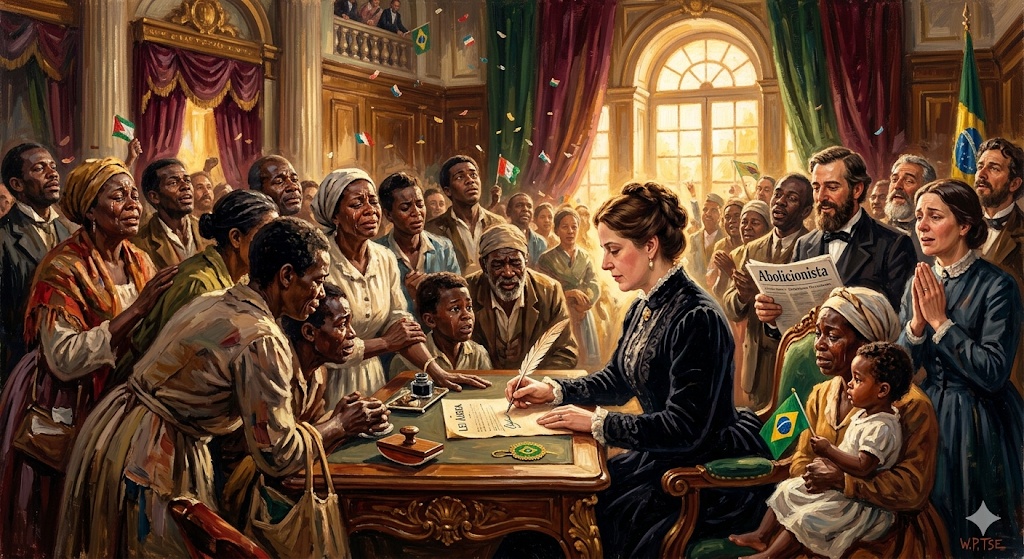
The Event:
On May 13, 1888, Princess Isabel of Brazil signed the Lei Áurea (Golden Law), officially abolishing slavery throughout the Empire of Brazil. This landmark legislation was remarkably brief, containing only two main articles: the first declared slavery abolished from that date forward, and the second repealed all contrary dispositions. Brazil was notably the last country in the Western world to end the institution of slavery. The law was passed amidst growing internal pressure from abolitionist movements, frequent slave revolts, and the practical collapse of the system in many regions, finally ending over three centuries of legal human bondage in the nation.
The Impact:
The impact of the Golden Law was both immediate and transformative, though it brought complex challenges. While it legally freed approximately 725,000 enslaved individuals, the law provided no state support, land, or compensation for the newly liberated, leaving many in extreme poverty and social marginalization. Politically, the abolition alienated the powerful landed elite and slave owners—who received no indemnification for their “property”—leading them to withdraw their support from the monarchy. This loss of support was a primary factor in the eventual overthrow of the Brazilian Empire and the proclamation of the Republic just one year later in 1889. Today, the event remains a cornerstone of Brazilian history, serving as both a celebration of freedom and a reminder of the long struggle for racial equality that continues in the country.