
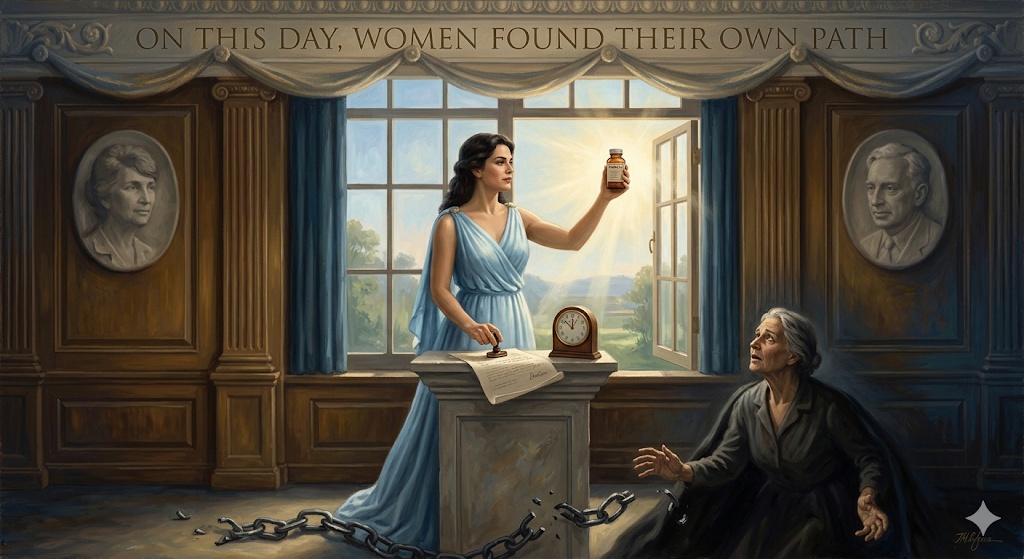
 On May 9, 1960, the United States Food and Drug Administration (FDA) made a quiet but monumental decision by officially approving the first commercially produced oral contraceptive, Enovid-10. This approval was the culmination of decades of tenacious advocacy, primarily led by activist Margaret Sanger, and pioneering scientific work by researchers like Gregory Pincus and John Rock. The development of the pill represented a significant leap in medical science, as it was the first reliable, female-controlled method of contraception, transforming a deeply personal and controversial issue into a widely accessible prescription drug. While the announcement was not initially accompanied by massive public fanfare, its release catalyzed a movement that would reshape the social fabric of the United States and the world.
The impact of the FDA’s approval of “the pill” was nothing short of a social revolution, providing women with unprecedented control over their reproductive futures. By decoupling sex from the constant fear of pregnancy, it allowed millions to plan their families, pursue higher education, enter the workforce, and seek economic independence. This new-found autonomy is widely credited with fueling the second-wave feminist movement, challenging traditional gender roles, and profoundly altering family dynamics. Within a few years, millions of women were using the pill, and it has since been recognized as one of the most transformative developments for women’s reproductive freedom and gender equality in the 20th century.