
The Event:
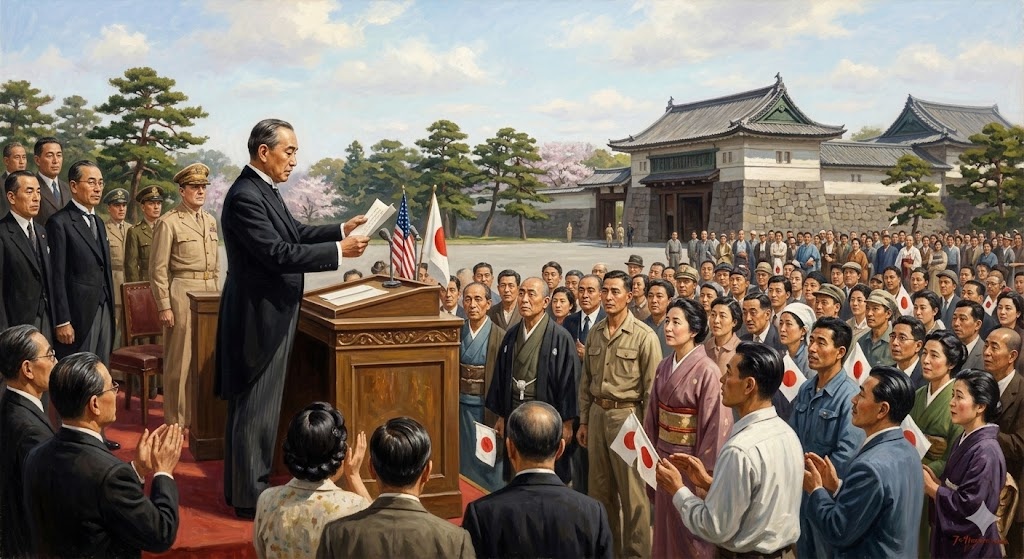
On May 3, 1947, the current Constitution of Japan went into effect, marking a profound transformation for the nation. This new constitution, fundamentally different from the Meiji Constitution that preceded it, was drafted under the supervision of the Supreme Commander for the Allied Powers (SCAP), General Douglas MacArthur, following Japan’s defeat in World War II. It enshrined the principles of popular sovereignty, respect for fundamental human rights, and, most famously, a renunciate position on war. Article 9 declared the Japanese people forever renounce war as a sovereign right of the nation and the threat or use of force as a means of settling international disputes. The constitution also reduced the Emperor from a divine, absolute monarch with supreme command of the Army and Navy to a “symbol of the State and of the unity of the People,” stripping him of all political power.
The Impact:
The impact of the 1947 constitution has been enormous, shaping modern Japan into a deeply pacifist and democratic state. Article 9 has been central to Japan’s identity, preventing the development of a traditional offensive military and fostering an anti-militarist public consciousness, though it has also been a continuous source of political debate and reinterpretation, particularly regarding the Self-Defense Forces. The shift to a parliamentary system and popular sovereignty established a stable, pluralistic democracy that facilitated Japan’s remarkable post-war economic recovery and its re-emergence as a respected member of the international community. The strong guarantees of civil and human rights paved the way for social and cultural liberalization. Ultimately, this May 3 constitution provided the legal and ideological framework that allowed Japan to transition from an aggressive, autocratic empire to a peaceful, prosperous, and democratic global power.